
Medical Authority and the Evolving Evidence Behind Hormone Therapy
- garzaj25
- May 3
- 4 min read

“Medical authority” is something that continues to be debated in healthcare as new research emerges, long-held assumptions are challenged, and clinical guidelines evolve. Few areas illustrate this better than hormone replacement therapy (HRT) and testosterone replacement therapy (TRT), where shifting evidence has significantly changed how these treatments are viewed over time.
What was once considered broadly risky is now understood in a much more nuanced way dependent on timing, patient selection, formulation, and overall health status.
Women and Hormone Replacement Therapy (HRT)
Hormone replacement therapy for women has experienced one of the most dramatic shifts in modern medical practice.
Early findings from the Women’s Health Initiative (WHI) in the early 2000s suggested that postmenopausal HRT particularly combined estrogen and progestin therapy was associated with increased risks of blood clots, stroke, and breast cancer. These results had an immediate and widespread impact. Prescriptions dropped significantly, and HRT became widely viewed as something to avoid except in severe cases (WHI, 1998).
However, as time passed, researchers began to take a closer look at the WHI data and its limitations. One of the key insights was that risk was not uniform across all women. Factors such as age, timing of initiation, dosage, and type of hormone used all appeared to influence outcomes more than initially understood. This led to a major shift in clinical thinking.
Today, updated guidance from organizations such as the North American Menopause Society (NAMS) and the American College of Obstetricians and Gynecologists (ACOG) presents a more individualized approach. Rather than viewing HRT as broadly dangerous or universally beneficial, it is now considered a therapy whose risk–benefit profile depends heavily on patient-specific factors.
For many healthy women under age 60, or those within 10 years of menopause onset, current evidence supports that HRT is both effective and generally safe for managing symptoms such as hot flashes, night sweats, sleep disturbances, and vaginal dryness (NAMS, 2022; ACOG, 2022). In addition, there is ongoing recognition of benefits related to bone health and overall quality of life when appropriately prescribed.
Men and Testosterone Replacement Therapy (TRT)
A similar evolution in understanding has occurred with testosterone replacement therapy in men.
In the early 2010s, several observational studies raised concerns about a possible association between TRT and increased cardiovascular risk, including heart attack and stroke, particularly in older men or those with pre-existing health conditions. These findings led to increased caution in prescribing and sparked ongoing debate within the medical community.
It’s important to understand the limitations of those early studies. Many were observational in nature, meaning they could show association but not prove causation. In many cases, men receiving TRT were already older, sicker, or had more underlying cardiovascular risk factors, which likely influenced the results.
As more rigorous research emerged, the picture began to change. Clinical guidelines now emphasize that when testosterone deficiency is properly diagnosed based on both symptoms and laboratory testing, TRT may offer health benefits. These can include improved energy, mood, sexual function, and certain metabolic health markers.
At the same time, researchers continue to study long-term cardiovascular outcomes. The most recent large-scale randomized data, including findings from the New England Journal of Medicine (2023), found no increase in heart attack, stroke, or cardiovascular death compared to placebo in appropriately selected patients. Importantly, this study also highlighted that TRT is not entirely without risk, reinforcing the need for careful screening, dosing, and ongoing monitoring.
Conditions such as blood clots or heart rhythm irregularities remain areas of continued attention, particularly in higher-risk populations.
The Bigger Picture: How Medical Guidance Evolves
When looking at both HRT in women and TRT in men, a common pattern emerges: early data often raises caution, but later research refines understanding rather than completely reversing it.
Medical knowledge is not static. It evolves as study design improves, sample sizes increase, and long-term outcomes become clearer. What initially appears as risk may later be better understood as a matter of patient selection, timing, or treatment method rather than the therapy itself.
This is why modern clinical practice increasingly emphasizes individualized care rather than broad generalizations.
Balancing Clinical Judgment, Policy, and Access
Overall, medical decisions are best guided by clinicians who apply current evidence in the context of each patient’s unique health profile. Providers are responsible for determining medical necessity and ensuring treatments are appropriate, safe, and evidence-based.
At the same time, insurance companies and government agencies play an important role in maintaining safety standards, managing costs, and defining coverage structures. Their role should support not replace clinical decision-making. The most effective healthcare system is a balanced one. Medical evidence and provider expertise should guide treatment decisions, while payers help ensure access and affordability in a way that still respects legitimate medical need.
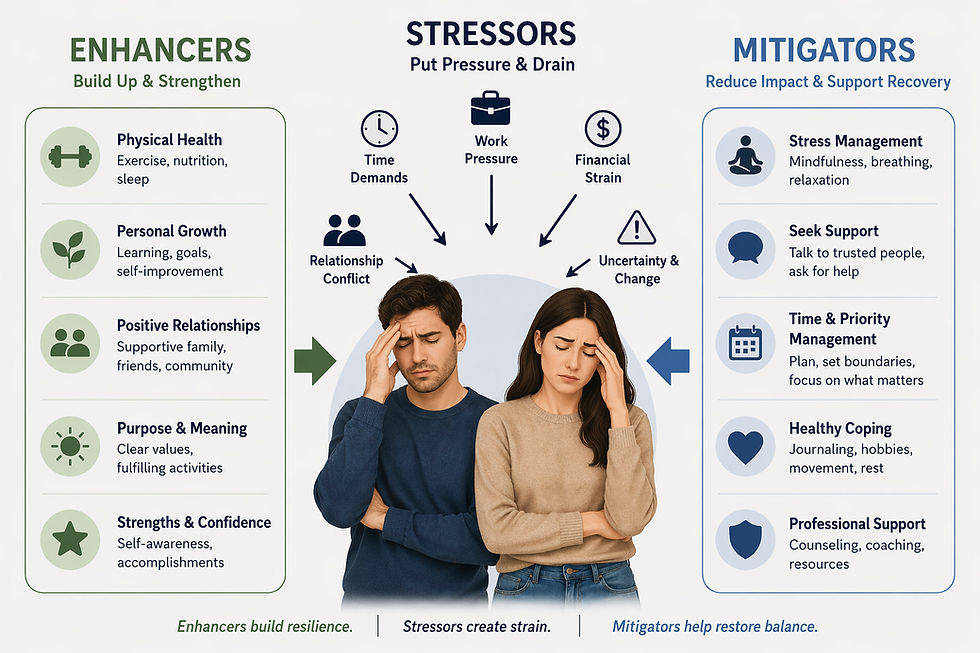
Hormone Imbalance and Mood Regulation:
Hormones like Cortisol directly influence the body’s stress response. Chronically elevated levels can lead to anxiety, irritability, and burnout.
Fluctuations in Estrogen and Progesterone can affect mood stability, contributing to symptoms like mood swings, low energy, and depression.
Testosterone plays a role in motivation, confidence, and mental drive. Low levels are often linked to fatigue, low mood, and decreased focus.
Thyroid hormones regulate metabolism and brain function. Imbalances can lead to symptoms such as depression, brain fog, or heightened anxiety.
Hormones interact closely with neurotransmitters like Serotonin and Dopamine, which are key regulators of mood, pleasure, and emotional balance.
Blood sugar–regulating hormones like Insulin can impact mood. Spikes and crashes may contribute to irritability, fatigue, and difficulty concentrating.
Final Thoughts
Hormone therapy, whether for men or women, highlights an important reality in medicine: conclusions evolve. As new research emerges, the focus shifts away from absolute answers and toward individualized care, informed by both evidence and clinical judgment.


-Author: Jordan Garza, Founder of Lifeline Strategies, LLC
Lifeline Strategies specializes in community health, resilience, and evidence-based approaches to improving public safety and well-being.
Comments