
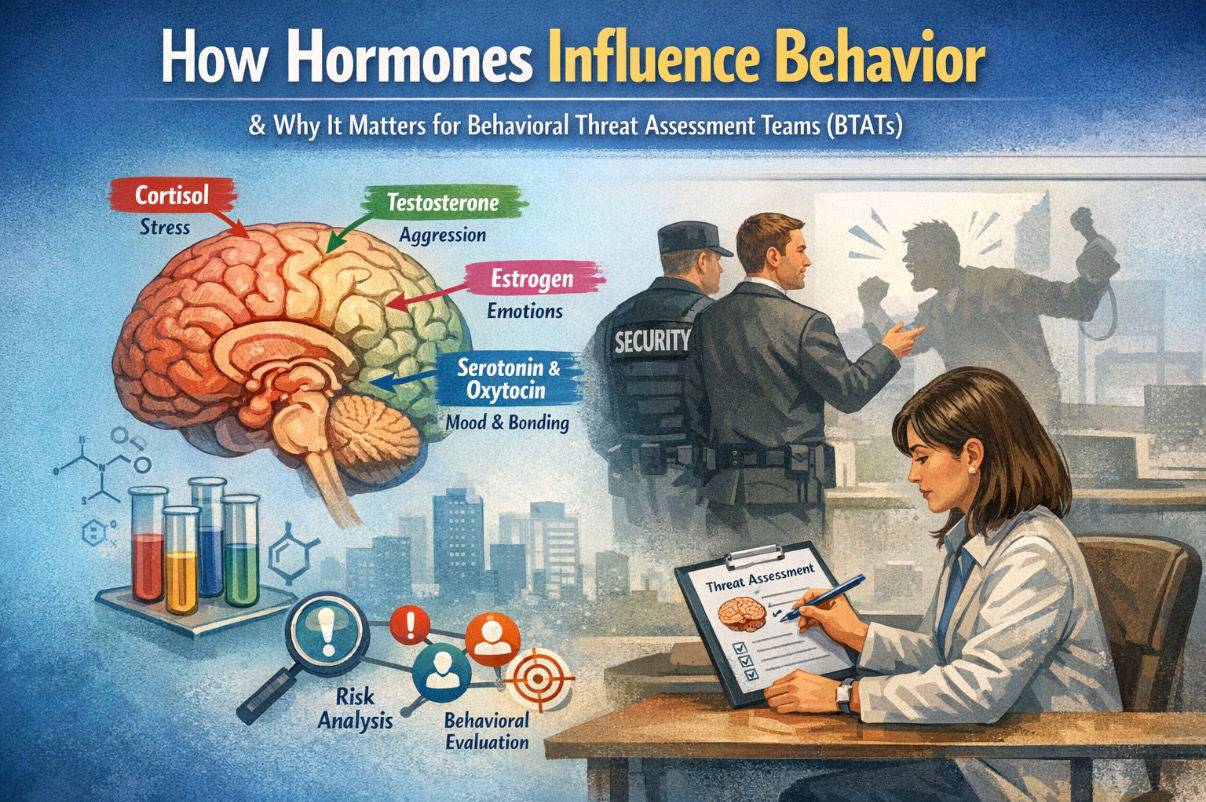
How Hormones Influence Behavior and Why It Matters For Behavioral Threat Assessment Teams (BTATs)
- garzaj25
- Feb 15
- 4 min read

When we talk about behavior in schools and communities, we usually focus on environment, relationships, stress, trauma, and social context. All of those matter. But there is another powerful driver that is often overlooked in behavioral conversations: hormones.
Hormones are chemical messengers that help regulate how the brain and body respond to stress, sleep, growth, threat, connection, and emotion. When they are out of balance or rapidly changing they can significantly affect how a person thinks, feels, and behaves.
For Behavioral Threat Assessment Teams (BTATs) and multidisciplinary school partners, understanding this biological factor helps reinforce a simple but important principle: behavior is not just choice it is also physiology.
What are hormones, and why do they affect behavior?
Hormones are released by the endocrine system (including the adrenal glands, thyroid, pituitary, and reproductive organs). They travel through the bloodstream and directly influence how the brain processes information and regulates emotion, attention, and impulse control.
Research in neuroscience and behavioral health shows that hormones interact closely with:
the stress system (HPA axis),
neurotransmitters such as serotonin and dopamine,
and brain regions responsible for judgment, emotion, and self-regulation (including the prefrontal cortex and amygdala).
In short, hormones help shape how the brain reacts to the world.
Key hormones linked to behavior
1. Cortisol – the stress hormone
Cortisol plays a central role in how the body responds to perceived threat and pressure. In the short term, it helps a person stay alert and mobilize energy.
When stress becomes chronic, cortisol regulation can become disrupted.
Research shows that prolonged or repeated stress exposure is associated with:
increased emotional reactivity
difficulty concentrating
impaired impulse control
sleep disruption
anxiety and mood instability
In children and adolescents whose brains are still developing chronic stress and altered cortisol patterns are associated with changes in emotional regulation and executive functioning.
For schools, this is especially important. Persistent behavioral dysregulation can sometimes reflect a nervous system that is constantly operating in “threat mode.”
2. Sex hormones (estrogen, progesterone, testosterone)
Estrogen, progesterone, and testosterone influence far more than physical development. These hormones interact with brain systems involved in emotion, motivation, and social behavior.
Research demonstrates that fluctuations in these hormones, particularly during:
puberty,
the menstrual cycle,
postpartum periods,
and perimenopause,
can affect:
mood stability
irritability
emotional sensitivity
energy levels
and stress tolerance
Testosterone has also been linked to changes in dominance-related behavior, risk taking, and reactivity, though its influence is shaped heavily by context, environment, and social learning.
In school settings, this is one reason adolescence is a period of increased emotional volatility, sensitivity to peer feedback, and sometimes impulsive decision-making.
3. Thyroid hormones
Thyroid hormones regulate metabolism and play a critical role in brain functioning. Research consistently shows that both underactive and overactive thyroid conditions are associated with behavioral and cognitive symptoms, including:
fatigue and slowed thinking
irritability
anxiety
depressed mood
attention and memory problems
In children and adolescents, untreated thyroid disorders can interfere with learning, emotional regulation, and overall functioning.
4. Melatonin and sleep-related hormones
Hormones that regulate sleep, particularly melatonin, also have downstream effects on behavior.
Sleep disruption is strongly associated in research with:
emotional dysregulation
impulsivity
aggression
reduced frustration tolerance
and impaired judgment
During adolescence, biological shifts in melatonin timing naturally push sleep later often clashing with early school schedules. Chronic sleep debt can significantly amplify behavioral concerns.
Hormones, the brain, and inflammation
A growing body of research shows that hormonal systems are tightly linked to immune activity and inflammation. Stress hormones, in particular, can influence inflammatory responses in the body and brain.
Neuroinflammation has been associated with changes in:
mood
motivation
cognitive flexibility
and emotional processing
This helps explain why physical health, chronic stress, and emotional functioning are deeply interconnected.
What this means for BTAM teams
This is not about turning educators or threat assessment teams into medical diagnosticians.
It is about strengthening the quality of our questions.
When a student or individual presents with:
sudden behavioral change,
increasing emotional volatility,
unexplained fatigue or cognitive decline,
new impulsivity or aggression,
or declining coping capacity,
a biologically informed lens encourages teams to ask:
Has anything changed medically?
Are there sleep, stress, or developmental factors that should be considered?
Is a referral for medical or mental health evaluation appropriate?
This is particularly important when behavior does not respond as expected to traditional behavioral or disciplinary strategies.
Behavior is communication and sometimes it is biology
Hormonal influences do not replace social, psychological, and environmental explanations for behavior. They complement them.
In BTAM work, this reinforces what many multidisciplinary teams should strive to do well:
look beyond surface behavior and search for contributing factors across systems.
Prevention is not surveillance.
It is coordinated, structured communication between education, mental health, healthcare, and families, disciplined, evidence-driven inquiry, not assumptions.
When we acknowledge that biology can shape behavior, we increase our ability to respond with accuracy, fidelity, compassion, and better long-term outcomes.

-Author: Jordan Garza, Founder of Lifeline Strategies, LLC
Lifeline Strategies specializes in community health, resilience, and evidence-based approaches to improving public safety and well-being.


Comments